
Underwater volcanology expedition cost explained: Learn real prices, what affects them, and how to plan your adventure.
The underwater volcanology expedition cost ranges between $50,000 and $250,000+ depending on vessel size, crew, equipment, and mission duration. Academic research teams often secure grants, while private explorers may fund trips through sponsorships or partnerships with marine institutes.
Have you ever wondered what it really takes—financially and logistically—to explore an underwater volcano? 🌋 The thought of diving into the unknown depths of the ocean sparks curiosity and excitement. But before embarking on such an adventure, it’s essential to understand the true costs involved. This guide breaks down every detail so you know what to expect, whether you’re dreaming of funding a research mission or joining one as a participant.
🌍 What Is an Underwater Volcanology Expedition?
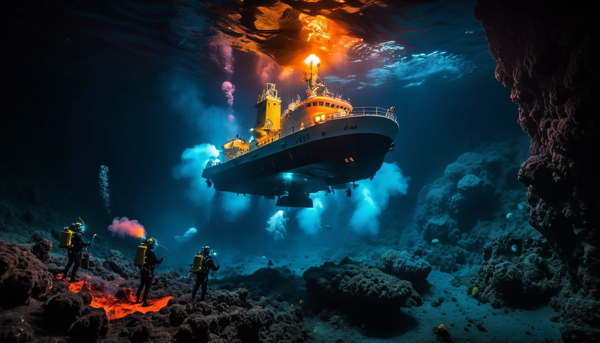
An underwater volcanology expedition is a scientific journey designed to study active or dormant volcanoes beneath the ocean’s surface. These missions involve advanced submersibles, sonar mapping, and high-definition cameras. Scientists aim to understand volcanic activity, marine ecosystems, and geological changes. Some expeditions are government-funded, while others are privately sponsored. Every mission contributes valuable data to our understanding of Earth’s crust. For adventure seekers, joining one can feel like stepping into another world.
💰 Average Cost of an Underwater Volcanology Expedition
The average cost of an underwater volcanology expedition usually falls between $50,000 and $250,000+. Shorter trips with basic exploration gear might sit at the lower end, while full-scale research missions requiring state-of-the-art submarines can climb much higher. Costs also vary by region, duration, and crew size. Some institutions cover the entire cost, while private teams may split expenses through sponsorship deals. It’s a hefty investment but one that opens doors to groundbreaking discoveries.
⚖️ Factors That Influence Expedition Cost
Several factors determine the final price tag of an underwater volcanology expedition:
- Vessel rental fees – Research ships can cost up to $40,000 per day.
- Submersibles and ROVs – Cutting-edge equipment adds hundreds of thousands in expenses.
- Crew and specialists – Scientists, divers, and engineers need salaries.
- Permits and licenses – Governments regulate exploration sites.
- Insurance – High-risk missions require specialized coverage.
- Logistics and supplies – Fuel, food, and maintenance all add up.
Together, these create a budget that few individuals can afford without financial backing.
🚢 Cost of Chartering Research Vessels
Research vessels are the backbone of any underwater volcanology mission. Daily rental rates typically range from $10,000 to $40,000, depending on size and onboard technology. Larger ships include labs, sonar systems, and launch platforms for submersibles. Smaller vessels are cheaper but offer fewer research capabilities. Most expeditions last several weeks, so vessel costs quickly escalate. Partnerships with universities often reduce financial strain.
Sample Vessel Cost Breakdown
| Vessel Size | Daily Rate | Amenities Included | Best For |
| Small (<50m) | $10,000–$15,000 | Basic lab, crew quarters | Short missions |
| Medium (50–80m) | $20,000–$30,000 | Advanced labs, ROV support | Research teams |
| Large (80m+) | $35,000–$40,000+ | Full labs, sub launch, sonar | Global expeditions |
🤿 Equipment and Technology Costs
Underwater exploration requires state-of-the-art tools. Remotely Operated Vehicles (ROVs) and submersibles are the most expensive. Renting a submersible for one dive can cost $10,000–$20,000. ROVs with high-definition cameras and robotic arms are slightly cheaper but still pricey. Specialized sensors for gas emissions and temperature readings add to the budget. Technology is non-negotiable for accurate research, making this category one of the largest expenses.
👨🔬 Crew Salaries and Expertise
An expedition isn’t just about ships and machines—it’s about people. Scientists, marine biologists, geologists, and engineers all play crucial roles. Salaries for skilled crew members range from $300 to $1,000 per day. Support staff, including chefs and maintenance workers, are also required. Without a professional team, the mission’s safety and success would be compromised.
📜 Permits, Licenses, and Legal Costs
Exploring underwater volcanoes often requires permits from coastal nations. Fees depend on location and environmental regulations. For example, permits in protected marine reserves can reach $5,000–$15,000. Legal costs also include insurance, liability coverage, and environmental impact assessments. Skipping this step risks fines or bans from future expeditions.
Permit & Licensing Expenses
| Permit Type | Estimated Cost | Notes |
| Standard Coastal Permit | $2,000–$5,000 | For open waters |
| Marine Protected Area Permit | $10,000–$15,000 | Strictly regulated zones |
| Insurance Coverage | $5,000–$20,000 | Based on mission risk |
🧾 Daily Operational Expenses
Every expedition must budget for ongoing costs like fuel, food, water, and medical supplies. Fuel alone for large vessels can exceed $10,000 per day. Meals for a crew of 20–30 people add up quickly. Safety equipment, emergency rations, and communication tools also fall under this category. These “hidden” costs are often underestimated but make up a significant portion of the total.
🌐 Funding Sources and Grants
Fortunately, most expeditions aren’t fully self-funded. Universities, research institutes, and government agencies often provide grants. Organizations like the National Science Foundation (NSF) support marine research. Private sponsors, including environmental groups and tech companies, sometimes partner with scientists. For adventure-focused expeditions, crowdfunding platforms can generate support. Smart funding strategies make these missions accessible beyond elite institutions.
🧳 Travel and Accommodation Costs
Before setting sail, participants must cover travel to the port of departure. International flights, visas, and hotel stays add several thousand dollars. Onboard, accommodation is typically included in the vessel rental. However, luxury-focused expeditions may charge additional fees for private cabins. For researchers, these costs are usually covered by the hosting institution.
🕰️ Duration of the Expedition
The length of the expedition significantly impacts total cost. A one-week trip might cost around $100,000, while a month-long journey could exceed $1 million. Longer missions require more fuel, food, and crew salaries. The scientific value of extended stays is immense, but so is the price tag. Careful planning ensures maximum results within budget.
🌋 Notable Expeditions and Their Costs
Some famous expeditions highlight the financial scale:
- Hawaiian Volcano Research (2018) – Estimated cost: $150,000 for 10 days.
- Caribbean Deep-Sea Study (2020) – Estimated cost: $400,000 for 3 weeks.
- Iceland Hydrothermal Project (2022) – Over $1 million for a month-long mission.
These examples show how mission goals, locations, and equipment choices create massive cost differences.
🧭 Alternatives for Budget Explorers
If the full expedition cost feels overwhelming, alternatives exist. Some organizations offer citizen science programs where participants join at lower fees. Virtual reality expeditions recreate dives for a fraction of the cost. Adventure cruise lines sometimes include volcanic site visits as part of tours. While not as in-depth as full research missions, these options let enthusiasts experience exploration without the six-figure price tag.
Budget-Friendly Options Comparison
| Option | Cost Range | Experience Level |
| Citizen Science | $5,000–$15,000 | Hands-on, limited research |
| Adventure Cruises | $3,000–$10,000 | Tour-focused, less science |
| VR Exploration | $50–$500 | Virtual, educational only |
📈 Long-Term Benefits of Expedition Investment
Despite the high cost, underwater volcanology expeditions provide immense benefits. Data collected helps predict volcanic eruptions, protect marine ecosystems, and expand geological knowledge. These insights directly impact climate studies and disaster preparedness. On a personal level, participants gain once-in-a-lifetime experiences. For institutions, the prestige of publishing groundbreaking research often justifies the investment.
🧠 Key Takeaways on Expedition Costs
- Costs range widely from $50,000 to over $1 million.
- Vessel rentals and crew salaries make up the largest expenses.
- Funding often comes from grants, universities, and private sponsors.
- Alternatives exist for enthusiasts with smaller budgets.
- The knowledge gained has long-lasting global benefits.
✅ Conclusion
An underwater volcanology expedition cost may sound overwhelming, but understanding the breakdown makes it clearer. From vessel rentals and crew salaries to permits and fuel, every detail has a price tag. Yet, the rewards—scientific discovery, adventure, and personal growth—are priceless. Whether you’re a researcher seeking funding or an enthusiast dreaming of joining, the journey is worth every dollar. 🌊🌋✨
❓ FAQs
How much does an underwater volcanology expedition cost?
Most expeditions range from $50,000 to $250,000. Costs depend on vessel size, crew, and equipment. Large-scale missions can reach $1 million or more.
Can individuals join underwater volcano research trips?
Yes, some organizations allow public participants. Citizen science programs and adventure cruises offer lower-cost options. Availability depends on funding and safety regulations.
What is included in an expedition package?
Packages usually cover ship accommodation, meals, and basic safety gear. Research-based expeditions also provide labs and submersible access. Travel to the port may be extra.
Who funds underwater volcanology expeditions?
Funding often comes from universities, government grants, and private sponsors. Some expeditions also rely on crowdfunding or environmental partnerships. The source varies by mission.
Are there cheaper ways to explore underwater volcanoes?
Yes, alternatives exist such as citizen science trips, adventure cruises, and VR expeditions. These options cost less but provide limited research experiences.



Leave a Reply